Is your business ready for the European Accessibility Act?
A new standard for digital inclusion
Starting June 28, 2025, the European Accessibility Act (EAA) will be fully enforced across the European Union. Its goal? To ensure that people with disabilities can access and use digital products and services just as easily as anyone else. At ZONKWAVE, we believe this is not just a legal requirement — it’s an opportunity. An opportunity to improve design, enhance functionality, and include more users. Let’s explore what the EAA means for your company — and how we can help you stay ahead.

What is the EAA, in simple terms?
The EAA (Directive (EU) 2019/882) is a European regulation that requires certain digital products and services to be accessible to people with disabilities — covering everything from websites to banking apps, e-commerce platforms, software, devices, and self-service machines like ATMs or ticket kiosks.
It applies to both EU-based and non-EU companies that sell or offer services within the EU market.
Is your business affected?
If your business offers digital services to the European market, there’s a good chance you’re impacted.
Here’s a quick checklist of services that fall under the EAA:
Covered products & services
• Websites & mobile apps
• Online stores & e-commerce platforms
• Online banking, crypto, and fintech platforms
• Telecom services: messaging, email, VoIP
• Digital TV guides and on-demand platforms
• Public transport apps and ticketing kiosks
• Smart devices (e.g. e-readers, payment terminals)
If your product or service fits any of these categories, accessibility compliance is not optional — it’s mandatory.
“Accessibility isn’t a niche feature — it’s a requirement for doing business in Europe. If your digital product serves real people, then it must serve all people. That’s not just regulation — that’s responsibility.”
— Daniel Serbu, Head of Design, ZONKWAVE
Why accessibility matters
87+ million EU citizens live with a disability.
They represent a massive — and often underserved — market.
Legal risks
Failing to comply with the EAA can lead to:
• Fines and penalties, determined by each EU member state
• Lawsuits or regulatory investigations
• Reputational damage and user loss
Business benefits
Accessibility isn’t just about avoiding fines:
• Improved user experience for all customers
• Better SEO, engagement, and retention
• Stronger brand reputation as an inclusive, modern company
• Alignment with CSR and ESG goals
What does compliance involve
The European Accessibility Act is based on EN 301 549, a European standard that includes WCAG 2.1 Level AA — the gold standard for digital accessibility. But compliance is not just about ticking boxes.
Here are just a few of the things that need to happen:
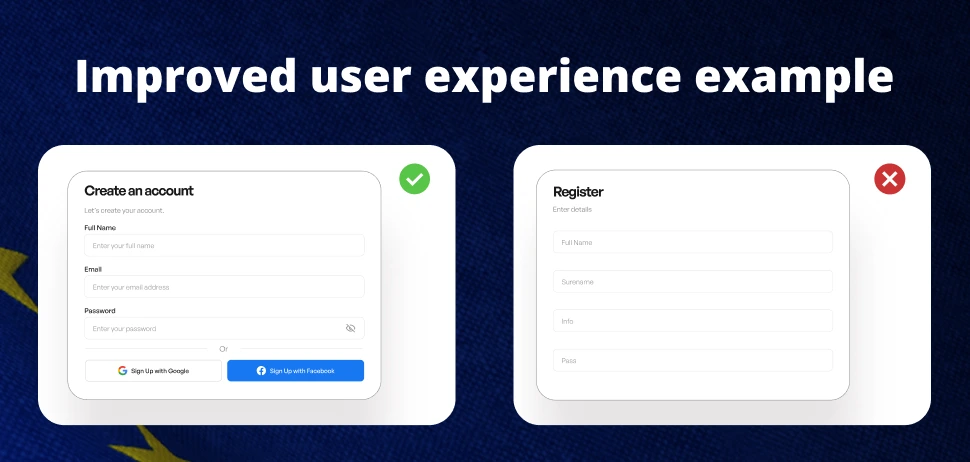
Make your design inclusive
• Ensure color contrast is sufficient for readability
• Don’t rely solely on color to convey meaning
• Enable text resizing up to 200% without breaking layout
• Make sure interactive elements are clear and consistent
Code with accessibility in mind
• Use semantic HTML and ARIA roles
• Make sure all buttons and forms are keyboard accessible
• Add alt text for all images and icons
• Ensure compatibility with screen readers
Test like your users do
• Run automated checks with tools like Axe and WAVE
• Conduct manual testing with assistive technologies like NVDA or VoiceOver
• Where possible, involve real users with disabilities for meaningful feedback
Maintain documentation
• Publish a clear Accessibility Statement
• List known accessibility issues and available alternatives
• Prepare a Declaration of Conformity if required for hardware or terminals
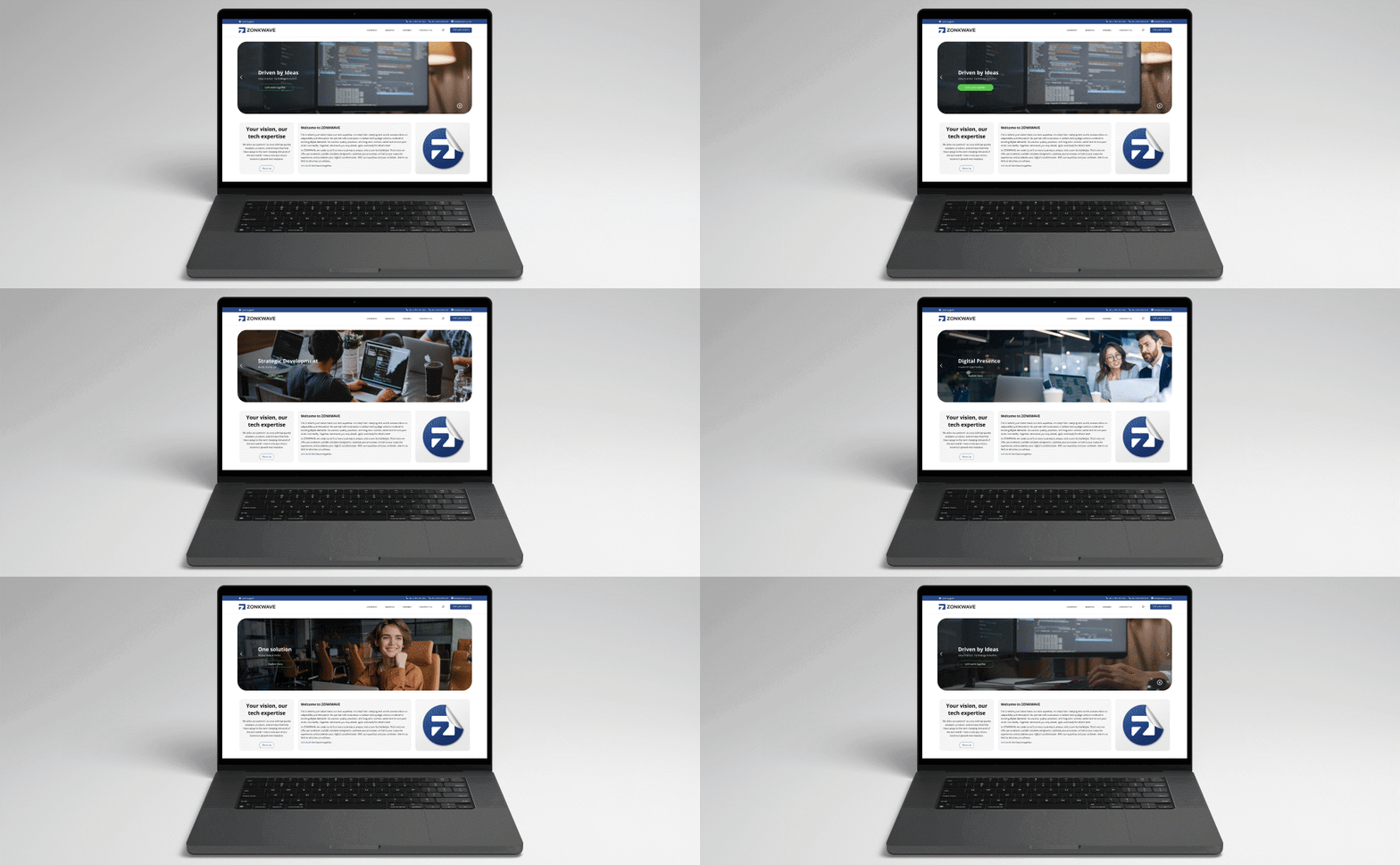
“Here’s a small example of how we’ve started applying EAA principles: our hero section now includes pause controls for background videos, the navigation menu is fully operable via click, and we’ve removed auto-advancing sliders. These aren’t just design tweaks — they’re functional choices that make the experience more accessible for everyone.“
— Vivienne Pataki, UX UI Designer, ZONKWAVE
Our approach
At ZONKWAVE, we see accessibility as a foundation — not a feature. That’s why we’ve integrated accessibility into our entire development and design workflow.
Here’s how we help businesses prepare for the European Accessibility Act:
✅ Step 1: Accessibility Audit
We analyze your websites, apps, or platforms for compliance issues — using both automated tools and expert manual review.
✅ Step 2: Design & content Review
We help your team create accessible visual interfaces, write inclusive content, and fix any design-based barriers.
✅ Step 3: Technical implementation
From code-level fixes to assistive tech compatibility, we make sure your platform works for everyone — keyboard users, screen reader users, and more.
✅ Step 4: Testing
We validate critical flows (login, checkout, forms) using screen readers and assistive technologies to ensure a real-world accessible experience.
✅ Step 5: Ongoing support & monitoring
We don’t stop at “done.” We continue to monitor, test, and advise as your platform evolves — because accessibility is a journey, not a destination.
Let’s make it happen — together
The deadline is coming fast. Whether you’re building something new or want to upgrade what you already have, we can help you design, develop, and deliver accessibility by default.
Want to talk to an expert?

Grow your business efficiently!
Subscribe to stay updated with the latest IT news and to benefit from free materials useful for growing your business.