
Building enterprise software products for the tourism industry
The tourism industry is one of the most dynamic and complex sectors in the global economy. Prices change constantly, availability is updated in real time, and customers expect fast, personalized, and error-free experiences.
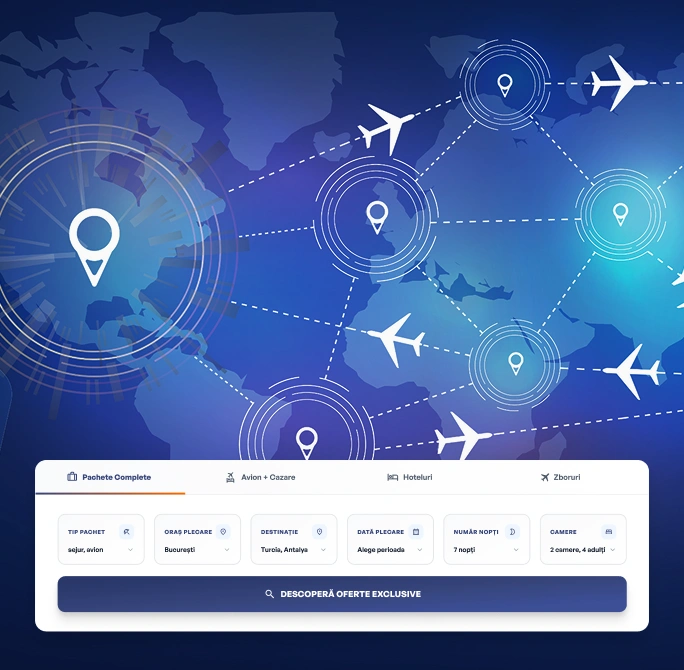
The Challenges of Software Development in the Tourism Industry
In this context, developing software for the tourism sector is not just about building a website or a booking platform, it is about creating a digital ecosystem capable of handling massive volumes of data, multiple integrations, and sophisticated commercial processes.
For travel agencies, tour operators, or companies operating in the tourism industry, investing in a high-performance software product can make the difference between accelerated growth and a loss of competitiveness.
The Tourism Industry Depends on Integrating Multiple APIs
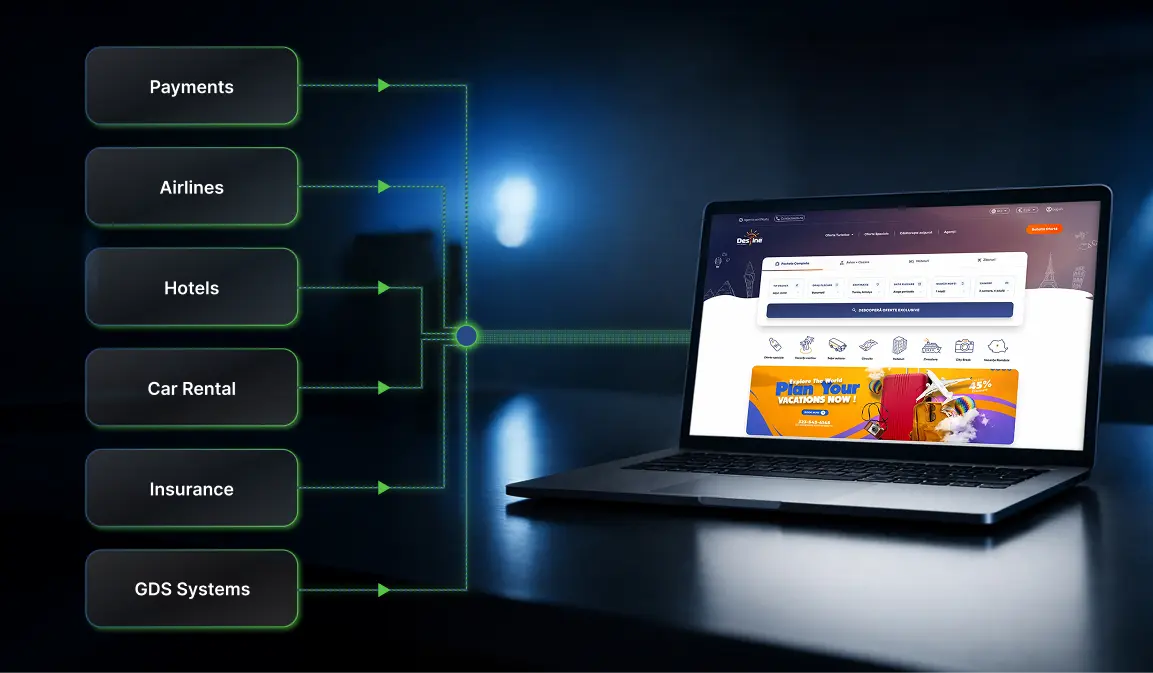
One of the biggest challenges in web software development for the tourism industry is the large number of external systems that must be connected into a single, functional platform.
A modern tourism product may require simultaneous connections to:
- international tour operators
- hotel providers
- GDS (Global Distribution Systems)
- airlines
- car rental providers
- payment processors
- travel insurance systems
- internal CRM and ERP systems
- marketing automation platforms
Each system operates with its own rules, different documentation, and distinct technical structures. For this reason, API integration becomes one of the most critical components in a tourism software project.
Without a well-designed architecture, the platform becomes slow, unstable, and difficult to scale.
Data Normalization – The Invisible Challenge
Behind a simple holiday search lies a large volume of data coming from completely different sources. Each tour operator provides information in its own format.
One provider may define a room as “Double Standard,” another as “DBL STD,” while a third may use an entirely different classification. The same inconsistency appears in included meals, local taxes, hotel amenities, and cancellation policies.
That is why one of the most complex areas in building tourism software is the data normalization process.
This process involves:
- unifying naming conventions
- standardizing pricing structures
- mapping locations
- comparing amenities
- cleaning duplicate data
- validating inconsistent information
Without normalization, users receive confusing results, and the company loses both conversions and credibility.
Dynamic Pricing and Constantly Updated Availability
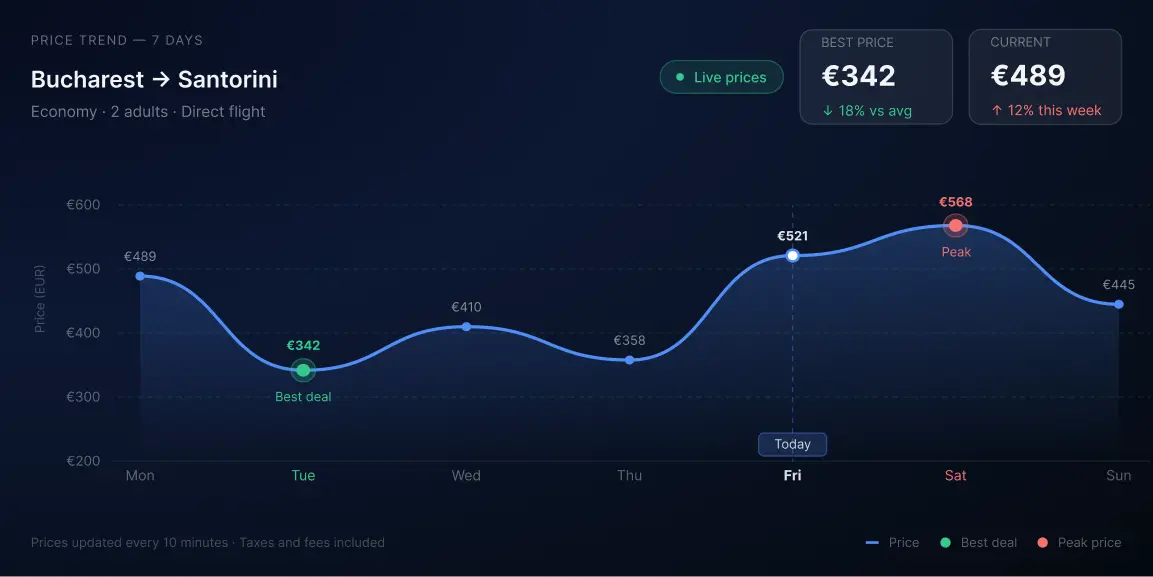
The tourism industry operates in an extremely dynamic environment. Prices for travel packages or hotel rooms can change at very short intervals—sometimes even every 10 minutes—depending on demand, seasonality, occupancy rates, or temporary promotions.
This means that a high-performance software product must be able to:
- update prices automatically and rapidly
- synchronize accommodation availability
- recalculate complex travel packages
- prevent the sale of already unavailable inventory
- display competitive offers in real time
From a software development perspective, this requires intelligent caching systems, processing queues, optimized databases, and scalable infrastructure.
The Multitude of Internal Processes Specific to the Tourism Industry
Modern tourism software does not serve only the end customer—it must optimize the entire organization.
In practice, large tourism platforms include modules for:
- managing partner agencies
- sales agent management
- commissions and commercial targets
- customer CRM
- support automation
- issuing travel documents
- invoicing
- notifications
- post-sale follow-ups and feedback collection
At the same time, modern companies are looking for solutions to create innovative travel packages by automatically combining flights, hotels, transfers, and local experiences.
This is where real operational efficiency delivers significant impact: fewer manual tasks, reduced costs, and increased sales speed.
AI Is Transforming How the Tourism Industry Operates
Artificial intelligence is becoming a major competitive advantage in the tourism industry. Modern platforms can integrate AI to automate decision-making and enhance the user experience.
Among the most valuable use cases are:
- analyzing user behavior
- delivering personalized travel recommendations
- making intelligent pricing adjustments
- identifying optimal moments for promotions
- 24/7 chatbot support
- instant multilingual assistance
- anticipating customer needs
AI enables agencies and operators to deliver premium services at scale, without a proportional increase in operational costs.

Infrastructure Required for Large-Scale Tourism Software
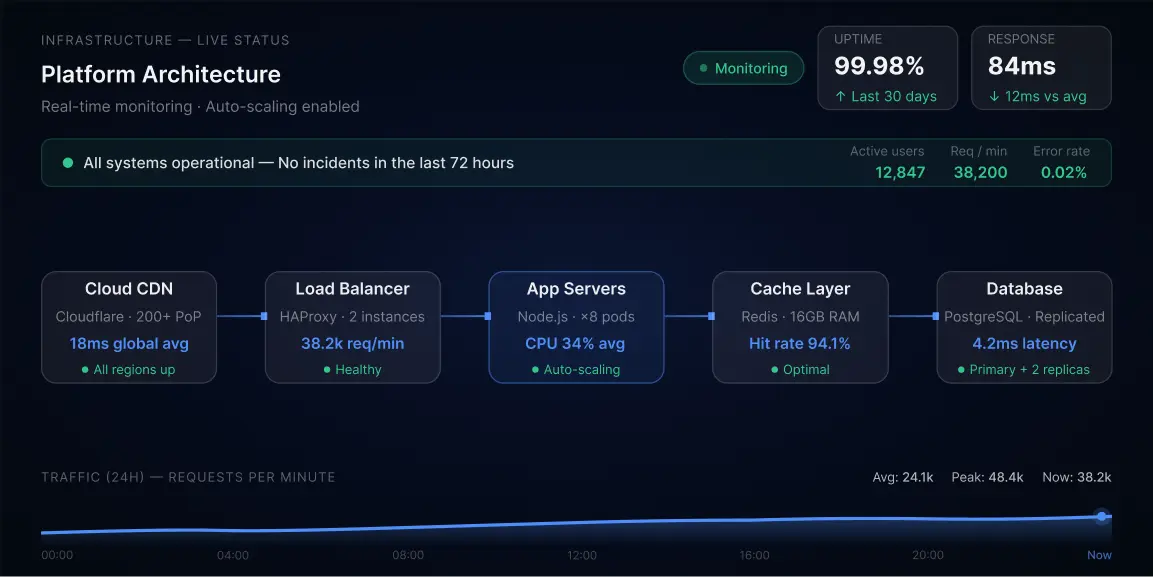
A tourism software product with high traffic and multiple integrations requires robust infrastructure. Traditional hosting is not enough.
Essential components include:
- scalable cloud servers
- load balancing
- replicated databases
- backup systems
- real-time monitoring
- advanced security
- asynchronous processing
- failover mechanisms
During peak periods such as Black Friday Travel, early booking campaigns, or high season, platforms must support thousands of concurrent users without performance degradation.
That is why web software development for the tourism industry also requires mature DevOps practices, not just code.
Tourism Software Products Are Never Truly Finished
One of the biggest misconceptions is that software is complete once it is launched. In reality, in the tourism industry, development is continuous.
There are constant changes and additions:
- new suppliers and APIs
- legislative changes
- tax updates
- shifts in consumer behavior
- new sales channels
- new types of travel packages
- mobile and omnichannel requirements
That is why high-performing companies treat their software platform as a living product—one that evolves continuously.
How High-Performance Software Helps a Tourism Company
A well-built digital product can completely transform how a tourism company operates.
It can reduce the time needed to generate offers from hours to minutes, increase conversion rates through better user experiences, automate customer support, and centralize all commercial data in one place.
Additionally, management gains clear visibility into agent performance, sales channels, profit margins, and customer behavior.
The challenges of software development in the tourism industry are real and complex. They involve API integration, data normalization, dynamic pricing, sophisticated operational processes, robust infrastructure, and continuous development.
At the same time, these challenges represent significant opportunities for companies that invest intelligently in technology.
In a market where speed, customer experience, and automation make the difference, a modern software product can become the primary competitive advantage for a tourism company.

Grow your business efficiently!
Subscribe to stay updated with the latest IT news and to benefit from free materials useful for growing your business.